Integrating Dynamic Wild Boar SVG Artwork into Professional Design Workflows
In the fast-paced environment of modern digital design, the efficiency of your asset library often dictates the speed and quality of your output. A Wild Boar SVG is more than just a static image; it is a versatile vector component that can anchor branding projects, merchandise lines, and marketing campaigns. When you select a high-quality vector design that exudes strength and vitality, you are investing in a foundational element that streamlines the production process from concept to final delivery. This article explores how to effectively integrate this specific type of dynamic vector artwork into your existing workflows, ensuring compatibility, scalability, and professional results.
Understanding the Asset: Why Vector Matters in Production
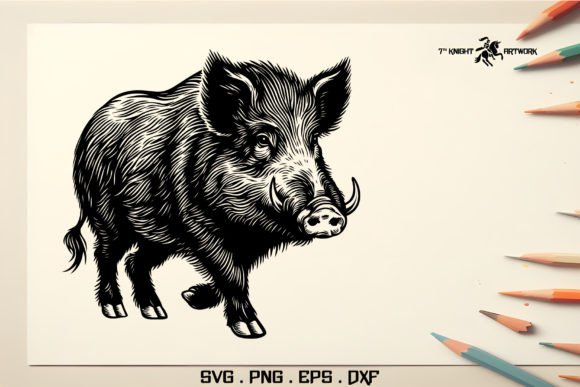
Before diving into implementation, it is crucial to understand why the Wild Boar SVG format is preferred over raster images for professional applications. Unlike PNG or JPEG files, which are composed of fixed pixels, an SVG (Scalable Vector Graphic) uses mathematical paths to define shapes. This distinction is vital for workflow planning. When you incorporate a detailed black and white image of a wild boar in SVG format, you gain the ability to scale the artwork from a small favicon to a large-format billboard without any loss of resolution or clarity.
The rugged and fierce essence captured in a stylized wild boar design requires clean lines and sharp contrasts to maintain its impact. Rasterizing this image too early in the process can lead to jagged edges or blurriness when resized. By keeping the asset in its native vector state until the final export stage, you maintain total control over the quality. Furthermore, the availability of formats like EPS 10 and DXF ensures that this asset interacts smoothly with a wide range of industry-standard software, from Adobe Illustrator and CorelDRAW to CNC cutting machines used in signage and apparel manufacturing.
Pre-Production: Selection and Organization
Effective integration begins before the design work actually starts. The preparation phase involves selecting the right version of the Wild Boar SVG for your specific project requirements. Since these files often come in bundles including PNG with transparent backgrounds, EPS 10, and DXF, organizing these assets logically saves significant time during execution.
Consider creating a dedicated folder structure for your animal-themed branding assets. Within this structure, separate files by format and intended use. For instance, keep the SVG and EPS files in a "Master Vectors" subfolder for editing, while placing the PNGs in a "Web Previews" folder for quick mockups. This organizational habit prevents the common error of accidentally editing a flattened raster image instead of the editable vector source. Additionally, verify the compatibility of the SVG code if you plan to use it directly in web development environments. Clean, optimized SVG code ensures faster loading times and better performance on client websites.
Evaluating Design Versatility
When reviewing a dynamic wild boar vector design, assess its potential adaptability. Does the stylized form work in solid black for screen printing? Can it be simplified for embroidery? A well-constructed vector file allows you to toggle layers, adjust stroke weights, and modify paths without breaking the overall composition. This flexibility is essential when adapting a single asset across different media types, such as transitioning from a digital logo to a physical product label.
Execution: Integrating into Creative and Business Workflows
Once the asset is selected and organized, the next phase is execution. This is where the Wild Boar SVG becomes an active participant in your creative process. Whether you are a freelancer designing a logo for a hunting outfitter or a marketer creating social media graphics for an outdoor brand, the workflow remains consistent: import, customize, and export.
In a branding project, the wild boar imagery often serves as the primary mark or a supporting icon. Import the SVG into your vector editing software. Because the file captures the fierce essence of the animal in a dynamic form, you may need to adjust the surrounding typography to match its energy. Use the vector paths to align text baselines precisely with the contours of the boar's tusks or mane. The precision offered by vector tools ensures that your layout remains balanced and professional.
For merchandise creation, the workflow shifts slightly. If you are preparing files for print-on-demand services or local screen printers, the Wild Boar SVG must often be converted to specific color separations. The black and white nature of the original design simplifies this process, but you must ensure that all paths are closed and that there are no stray points that could cause printing errors. Using the DXF format becomes critical here if the production involves vinyl cutting or laser engraving, as these machines rely on precise path data to cut materials accurately.
Collaboration and Handoff
In team environments, the handoff of assets is a critical juncture. When sharing the Wild Boar SVG with developers or external vendors, provide clear documentation regarding the file versions. Explain which file is best for web use (SVG/PNG) and which is reserved for print (EPS/PDF). Including a readme file with color codes (HEX, RGB, CMYK) derived from the design ensures consistency across different platforms. This proactive communication reduces revision cycles and ensures that the final output matches the original vision.
Post-Production: Quality Control and Long-Term Usage
The lifecycle of a design asset does not end at the final export. Post-production involves rigorous quality control to ensure the Wild Boar SVG performs as expected in real-world scenarios. Review the exported files at 100% zoom to check for rendering artifacts, especially if the SVG is being used on responsive websites where it might be displayed on various screen densities.
Long-term usability depends on how well the asset is archived. Store the master vector files in a cloud-based backup system with version control. This practice protects against data loss and allows you to revisit the design months or years later for updates or repurposing. For example, a wild boar logo designed for a t-shirt today could be adapted for a mobile app icon tomorrow. Having the original, editable vector file makes this evolution seamless.
Optimizing for Digital Performance
If the vector artwork is deployed on a website, consider optimizing the SVG code. Remove unnecessary metadata, comments, or hidden layers that bloat the file size. A leaner SVG file improves page load speeds, which is a key factor in user experience and search engine ranking. Tools exist specifically for minifying SVG code without altering the visual appearance, ensuring that the dynamic impact of the wild boar design is preserved while maximizing technical efficiency.
Strategic Applications Across Industries
The utility of a Wild Boar SVG extends beyond traditional graphic design. In the education sector, educators might use these vectors to create engaging visual aids for biology or ecology lessons, leveraging the detailed anatomy of the stylized boar. Publishers can incorporate the artwork into book covers or chapter headers to evoke themes of wilderness and resilience. Small business owners in the outdoor recreation industry can utilize the design for uniform patches, vehicle decals, and storefront signage.
For entrepreneurs launching a new product line, the versatility of the vector file allows for rapid prototyping. You can quickly visualize how the boar emblem looks on different packaging materials, from kraft paper boxes to glossy labels. This ability to iterate quickly reduces the time-to-market and allows for more informed decision-making regarding product aesthetics.
Conclusion: Maximizing Value Through Strategic Integration
Incorporating a Wild Boar SVG into your professional toolkit is a strategic move that enhances both creative freedom and operational efficiency. By understanding the technical advantages of vector formats, organizing assets systematically, and following a disciplined workflow from selection to final export, you unlock the full potential of this dynamic artwork. Whether the goal is to build a robust brand identity, produce high-quality merchandise, or create compelling digital content, the rugged and fierce essence of the wild boar serves as a powerful visual anchor. Treat these vector files not merely as images, but as flexible components in a larger production ecosystem, and they will continue to deliver value across diverse projects and platforms for years to come.