Owl Vintage Junk Journal Ephemera for Creators
There is a distinct quietness to vintage owl imagery that instantly grounds a creative project. Unlike the frantic energy of modern graphic design, these illustrations carry a sense of history, wisdom, and stillness. For anyone building a junk journal, scrapbook, or mixed-media collage, Owl Vintage Junk Journal Ephemera offers more than just decorative elements; it provides a narrative anchor. When you integrate these digital images into your work, you are not merely filling space on a page. You are invoking a specific aesthetic that bridges the gap between natural history illustration and whimsical storytelling.
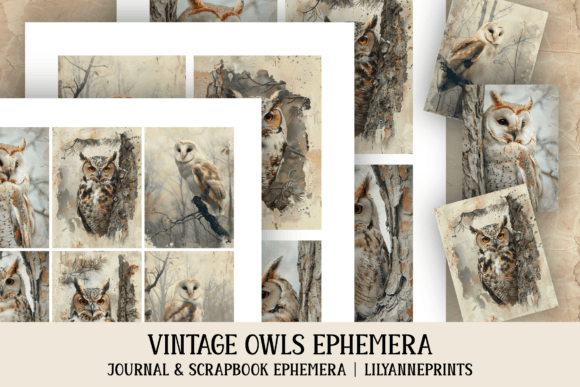
The appeal of vintage owl ephemera lies in its versatility. Whether you are a seasoned bookbinder or a hobbyist looking to preserve memories, these assets serve as foundational building blocks. The collection typically includes high-resolution .png files formatted for standard US letter paper (8.5″x11″), ensuring that what you see on your screen translates accurately to your printer. This immediacy is crucial for maintaining creative momentum. Instead of waiting for shipping or hunting through physical thrift stores for the perfect cutout, you have instant access to curated visuals that can be printed, cut, and adhered within minutes.
The Aesthetic Value of Vintage Owl Imagery
Owls have long been symbols of knowledge and mystery, making them particularly effective in journaling contexts where reflection and documentation are key. In a junk journal, which often thrives on eclectic combinations of texture and theme, vintage owl illustrations provide a cohesive thread. They work exceptionally well with sepia tones, aged paper textures, and botanical elements. When you layer these images over dictionary pages, old sheet music, or handwritten notes, they create a depth that feels intentional rather than random.
What makes this specific type of ephemera so useful is the level of detail found in older engravings and lithographs. Modern clip art often lacks the fine line work and shading that give vintage pieces their character. By using digital images of beautiful vintage owls, you inherit that craftsmanship. These images often feature intricate feather patterns and expressive eyes that draw the viewer in. This level of detail allows you to use them as focal points in a spread or as subtle background elements when reduced in size.
Practical Applications for Different Creators
The utility of these printable sheets extends far beyond simple decoration. Different types of creators can adapt these resources to meet specific goals and audience needs:
- Junk Journalists: Use the full-sheet prints as backgrounds for signature pages or pocket folders. The large format allows you to cut out individual owls for tags while using the remaining negative space as a textured backdrop.
- Scrapbookers: Incorporate smaller cutouts near photos of nature trips, library visits, or nighttime events. The vintage style adds a timeless quality to personal memories, elevating them above standard snapshot albums.
- Educators and Homeschoolers: Utilize the realistic aspects of vintage ornithology illustrations for unit studies on birds, habitats, or the history of scientific illustration. They can be glued into nature notebooks or used as prompts for creative writing exercises.
- Small Business Owners: If you sell handmade stationery or greeting cards, these instant download assets can be licensed (depending on the specific seller's terms) to create unique product lines without the need for hiring an illustrator.
- Bloggers and Content Creators: Print and photograph these elements to create flat-lay images for social media or blog headers. The aesthetic consistency helps in branding content related to reading, writing, or slow living.
Maximizing Your Instant Download Assets
Receiving three 8.5″x11″ paper sheets in .png format offers a structured yet flexible starting point. However, to get the most out of these files, understanding your printing workflow is essential. While the images are set up for standard letter size, printer settings can vary significantly. To ensure clarity and color accuracy, it is advisable to select "High Quality" or "Photo" settings on your printer menu. If you are using cardstock for sturdier tags or pockets, adjust the paper type setting accordingly to prevent ink smudging.
One practical approach to organizing your ephemera is to print multiple copies of the sheets. This allows you to experiment with different techniques without fear of wasting a unique image. You might keep one set pristine for direct cutting, while using another set for transfer techniques, such as gel medium transfers onto wood or fabric. The .png format ensures that if the background is transparent, you can place the owl directly onto colored paper without a white box surrounding it. If the background is part of the vintage design, embrace it as a built-in matting frame.
Creative Variations and Stylistic Approaches
To keep your projects original and audience-friendly, consider varying how you present these owl images. A common mistake in junk journaling is using every element at full opacity and original size. Instead, try these variations:
- Scale Manipulation: Resize the images before printing. A tiny owl tucked into the corner of a paragraph creates a sense of discovery, while a large, centered owl commands attention as a title piece.
- Layering and Depth: Cut out the owl and mount it on foam tape to create a 3D effect. Surround it with hand-drawn branches or stamped leaves to integrate it fully into the page environment.
- Color Alteration: Although the vintage look is charming, you can lightly wash watercolors over the printed image to match your page's color scheme. Alternatively, run the printed sheet through a toner transfer process to move the image onto patterned paper.
- Fragmentation: Don't feel bound to use the whole bird. Isolate a wing, an eye, or a cluster of feathers to use as abstract textural elements in a collage.
Consistency is key when building a journal that feels cohesive. If you choose a vintage owl theme for a specific section, carry that through with complementary fonts, paper choices, and embellishments. For instance, pair the vintage owl ephemera with typewriter-style fonts and kraft paper tones. This deliberate pairing signals to the reader that the section is curated, enhancing the overall user experience of flipping through your book.
Organizing for Efficiency and Inspiration
For freelancers and publishers managing multiple projects, organization is as important as creativity. When you download your instant files, store them in a dedicated folder labeled clearly, such as "Vintage Owl Ephemera - High Res." This ensures you can find them quickly when a deadline approaches. Consider creating a physical swatch book where you glue small samples of your printed outputs next to notes on which paper types worked best. This reference guide saves time in the future and helps maintain quality control across different batches of printing.
Furthermore, think about the narrative arc of your journal. Where do the owls fit best? Perhaps they act as guardians at the beginning of each month in a planner, or maybe they appear only in sections dedicated to night-time reflections. By assigning a role to these images, you transform them from random decorations into functional design elements that guide the reader through your content.
Ultimately, the value of Owl Vintage Junk Journal Ephemera is found in how it empowers you to create quickly and meaningfully. It removes the barrier of needing to draw or source rare physical items, allowing you to focus on composition and storytelling. Whether you are designing a gift for a friend, creating content for your blog, or simply documenting your own thoughts, these digital assets provide a reliable, high-quality foundation. With a little planning and creative experimentation, you can turn three simple sheets of digital prints into a rich, tactile experience that resonates with anyone who holds your finished work.