Unlocking Creativity: A Complete Guide to Printable Vintage Junk Journal Folio Templates
In the bustling digital age, there is a profound and growing desire to slow down, touch physical materials, and create something tangible with our own hands. This movement has breathed new life into the art of junk journaling, a creative practice that blends scrapbooking, diary keeping, and collage art. At the heart of many successful junk journals lies a specific structural element known as the folio. For those eager to dive into this hobby without the steep learning curve of designing layouts from scratch, Junk Journal Folio Templates offer the perfect solution. These printable resources allow crafters to produce professional-looking, vintage-inspired pockets and envelopes using nothing more than a home printer and some decorative paper.
What Exactly is a Junk Journal Folio?
Before diving into the mechanics of printing and assembly, it is essential to understand what a folio is and why it is so significant in the world of paper crafts. In the context of a junk journal, a folio is essentially a pocket or an envelope that is attached to a page. Unlike a standard pocket, however, a junk journal folio is designed to be interactive. It holds "ephemera"—small bits of paper like tickets, receipts, notes, photos, or handmade tags—that can be pulled out, examined, and tucked back in.
The purpose of the folio extends beyond mere storage; it adds a layer of discovery and engagement to the journal. When a reader flips through a junk journal, opening a folio reveals hidden treasures, making the experience dynamic rather than static. Whether you are documenting daily memories, creating an art journal, or assembling a gift for a loved one, these templates provide the framework to organize chaos into beautiful, curated collections.
The Rise of Digital Templates in Analog Crafts
It might seem contradictory to use digital files for a hobby rooted in tactile, analog experiences. However, the integration of PDF files and printable blank templates has revolutionized the crafting industry. Historically, creating a uniform set of pockets required measuring, cutting, and scoring dozens of pieces of paper by hand—a time-consuming process that often led to inconsistent results.
Modern technology bridges this gap. By downloading high-resolution templates, crafters gain access to perfectly measured designs that ensure every fold lines up and every pocket is the correct size. This fusion of technology and tradition allows individuals to focus on the creative aspects—choosing papers, adding embellishments, and writing content—rather than getting bogged down in the mathematics of design. It democratizes the craft, making it accessible to beginners while saving experienced artists valuable time.
Understanding Your Download: What You Get
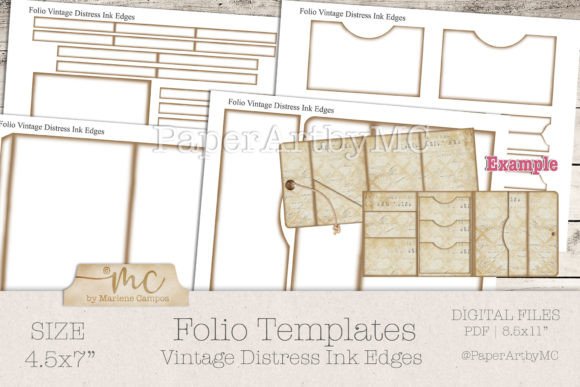
When you purchase or download a set of Vintage Junk Journal Folio Templates, you are typically receiving a collection of PDF files optimized for standard 8.5x11 paper. This standardization is crucial because it means you do not need specialized equipment or large-format printers. Everything is scaled to fit on sheets you likely already have in your tray.
These files come in High Resolution, ensuring that when printed, the lines are crisp, and any included vintage graphics or textures are sharp rather than pixelated. A key feature of quality templates is that they require NO need to alter any part. The designer has already accounted for fold lines, glue tabs, and spacing. You simply print, cut, score, and fold. This "plug-and-play" approach reduces frustration and ensures that the final product looks polished.
The versatility of these templates is another major benefit. While the file itself is a black-and-white outline or a pre-designed vintage background, the magic happens when you choose your substrate. You can print these templates directly onto decorative paper of your preference. Do you love floral patterns? Steampunk gears? Minimalist kraft tones? The template adapts to your style, allowing your personal aesthetic to shine through the structural framework.
Mastering the Print: Tips for Professional Results
Having the perfect template is only half the battle; the other half is executing the print correctly. The difference between a flimsy, misaligned pocket and a sturdy, functional folio often comes down to paper choice and printer settings. Here is a comprehensive guide to ensuring your project turns out beautifully.
Selecting the Right Paper Weight
Paper weight, measured in grams per square meter (gsm), dictates the sturdiness of your folio. If the paper is too thin, the pocket will tear when items are inserted and removed. If it is too thick, it may be difficult to fold cleanly without cracking the fibers.
- Ideal Range: For the best balance of flexibility and durability, aim for white paper or cardstock in the range of 160-180g. This weight is substantial enough to hold its shape but pliable enough for crisp folds.
- The Opaline Option: Many experienced crafters, including the creators of top-tier templates, often use opaline paper of 120g. Opaline has a smooth, slightly glossy finish that takes ink beautifully and offers a unique texture that feels premium. While slightly lighter than the ideal cardstock range, high-quality opaline is dense enough to function well for lighter ephemera.
- Decorative Papers: If you are printing directly onto patterned scrapbook paper, check the packaging for the gsm rating. Most standard scrapbook paper falls within the acceptable range, but always test a single sheet first.
Printer Settings and Hardware
Your hardware plays a pivotal role in the outcome. Whether you are using a laser or an inkjet machine, understanding your settings is key.
- Choose Your Machine: A color home printer from a reputable brand like HP, Canon, or Epson is sufficient for most projects. HP printers, for instance, are widely praised in the crafting community for their color accuracy and reliability with various paper types.
- Resolution Matters: Always navigate to your printer's setting options and select the highest resolution for print available (often labeled as "Best" or "High Quality"). This ensures that fine details in vintage designs are not lost.
- Paper Size Configuration: Double-check that your software and printer driver are both set to 8.5x11 inches (Letter size). Even a slight mismatch can cause the template to scale incorrectly, rendering the fold lines useless.
- Double-Sided Printing: Many folio designs utilize both sides of the paper—one side for the exterior pattern and the other for the interior or instructions. Double-sided print capabilities vary significantly between printer models. Some flip on the short edge, others on the long edge. Make proofs before committing your expensive decorative paper to a full run.
The Importance of Proofing
It is important to keep in mind that every computer and printer may have variation. Margins, scaling, and color profiles differ from device to device. Therefore, the golden rule of printing templates is to make proofs before to get the best result of your project printed. Print a single page on cheap copy paper first. Cut it out and fold it. Does it align? Is the size correct? Once you are satisfied with the proof, proceed to your high-quality stock.
Additionally, check the ink in your printer as well. Running a print job with low ink can result in streaks or faded areas, ruining the vintage aesthetic you are trying to achieve. Replace cartridges if necessary before starting a large batch.
When to Visit a Professional Print Shop
While home printing offers convenience and immediacy, there are scenarios where visiting a local copy center or print shop is the superior choice. Sometimes, it is actually better to print there because they possess professional printers capable of handling heavier cardstocks that might jam a home machine. Furthermore, professional shops can offer a wider variety of paper textures and weights that you might not have access to at home.
If you plan to make multiple journals or need hundreds of folios, the cost efficiency and speed of a commercial printer often outweigh the DIY approach. Simply bring your PDF files on a USB drive or upload them to the shop's portal, specify your desired paper type, and let the professionals handle the rest.
Conclusion: From File to Finished Art
Creating a junk journal is a journey of self-expression, and Junk Journal Folio Templates are the vehicles that make this journey smoother and more enjoyable. By leveraging high-resolution, ready-to-print designs, you bypass the technical hurdles of layout design and jump straight into the joy of creation. Whether you choose to print on sturdy 180g cardstock or elegant 120g opaline, the result is a personalized, interactive artifact that captures memories in a unique way.
Remember, the key to success lies in preparation: choose your paper wisely, understand your printer's quirks, and always run a test print. With these tools and tips in hand, you are ready to transform simple digital files into a tangible legacy of vintage charm and creative storytelling. Happy crafting!